
Tube / multitube heat exchangers
FZ INOX stainless steel tube and multitube heat exchangers deliver efficient, durable heat transfer for the food industry. Available as single tube, tube bundle, coil or corrugated tube — and designed to withstand high pressures and repeated thermal cycles.
Customisable to your fluids and process, from viscous liquids to gases, they are an ideal choice for heating, cooling and heat recovery.
Request a quote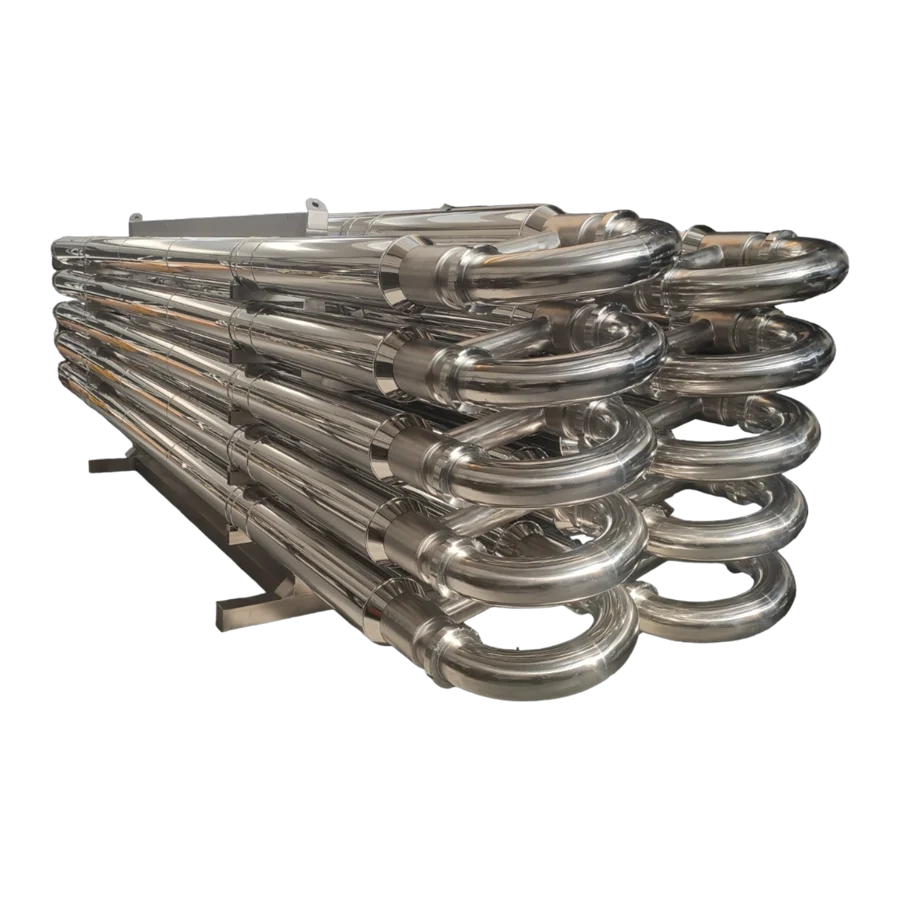
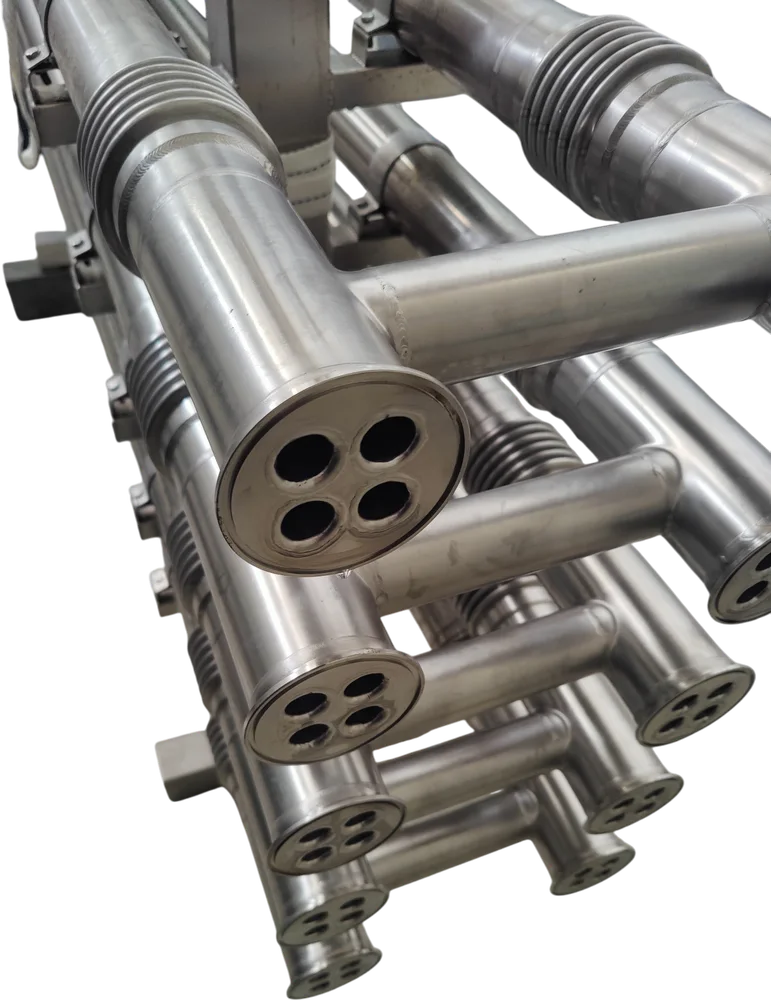
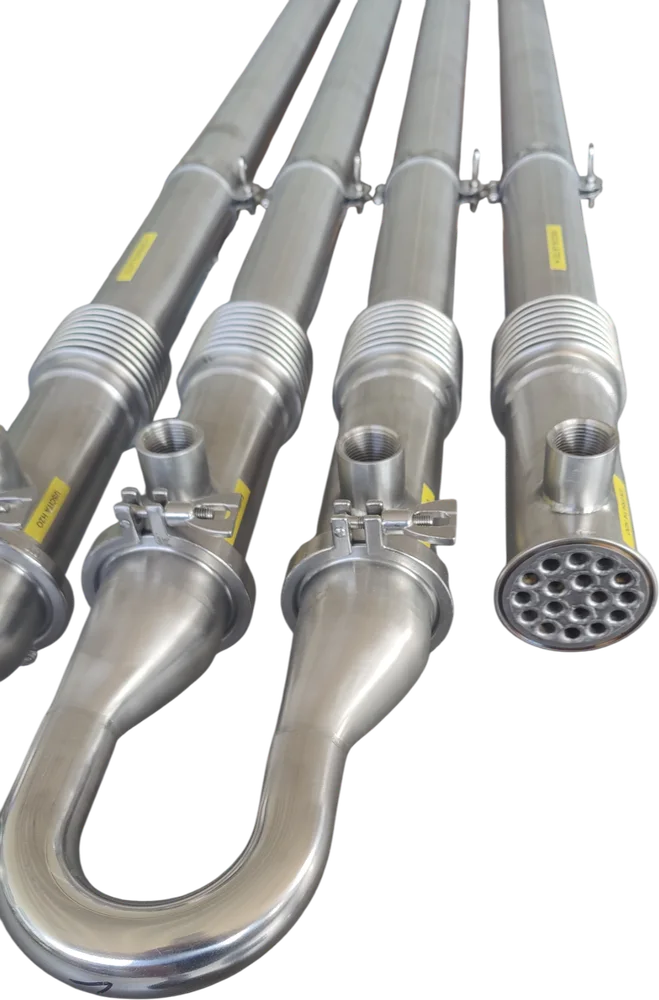
The same joint, on machines that left our workshop. Tap to enlarge.
Why the bellows is there
Heat makes steel grow. The tube bundle and the shell never grow by exactly the same amount, so something inside has to give.
What it does
The bellows compresses and takes that difference. Overall length stays put, and the welds at the tube sheets stay unloaded.
Why it matters years later
Without it the load lands on the same welds every single cycle. That exchanger will not fail on day one. It fails after a few seasons.
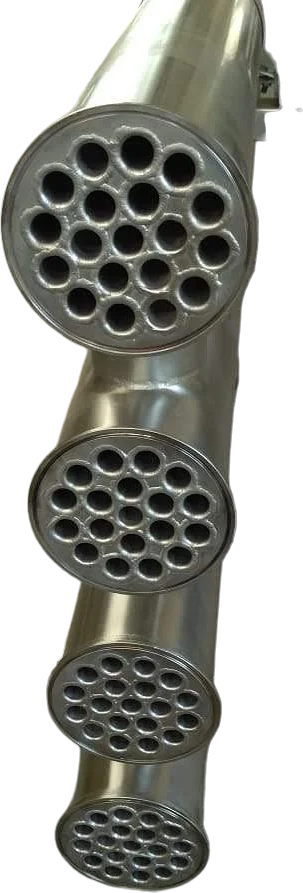
Multitube
More surface inside the same shell. For product that flows clean.
Tube-in-tube
Nothing to catch on. Pieces and fibre go through whole.
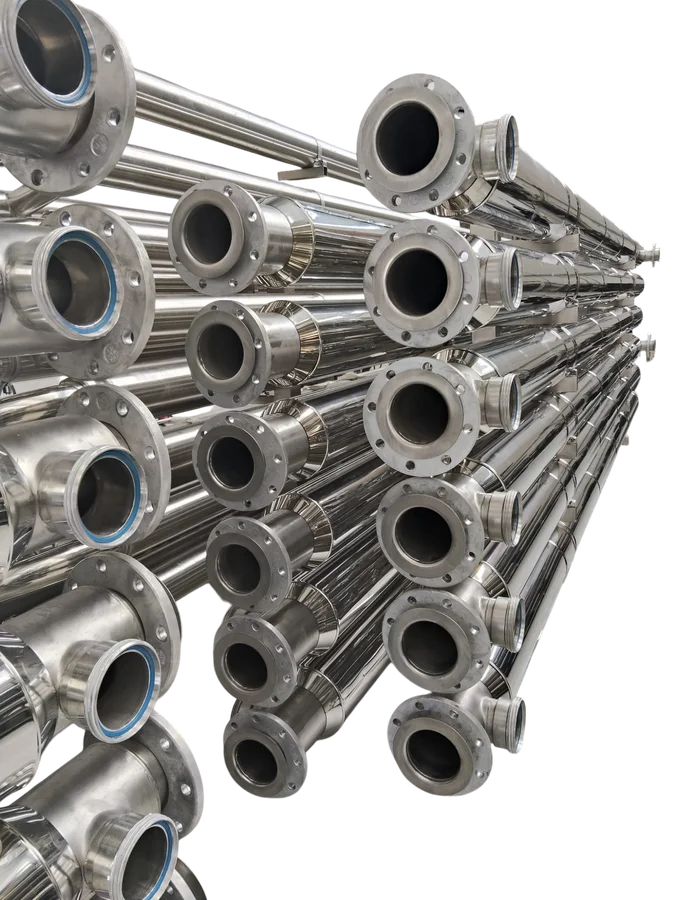
Bends can be opened out. Where the product is delicate or carries pieces, we build the return bends wide instead of tight. The stream changes direction without being forced through a sharp turn, so what goes in whole tends to come out whole — and there is less for a deposit to grab onto on the way round. It also costs you less pressure across the exchanger: every tight turn is resistance the pump has to push against, and wide bends give back some of it.
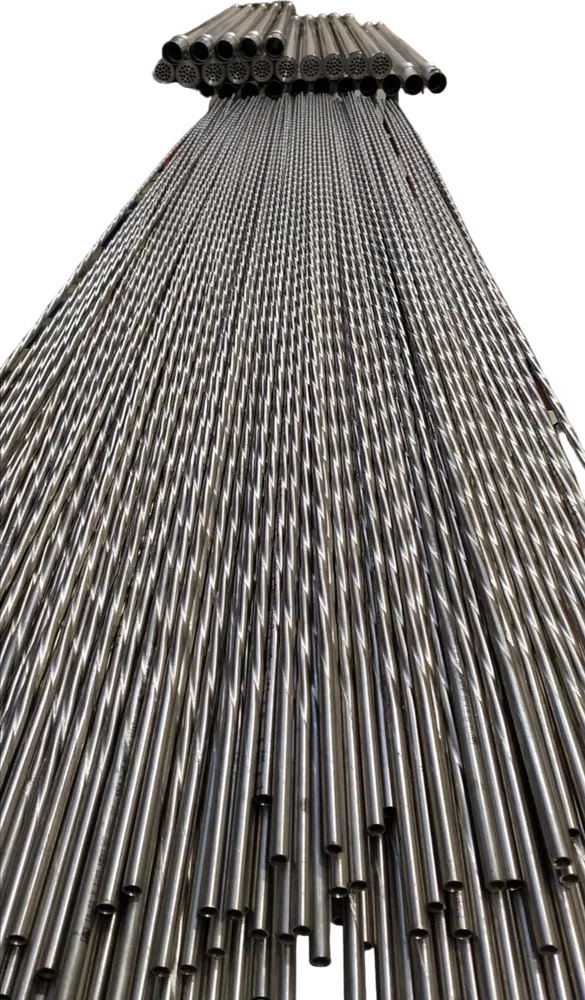
We can corrugate the inner tubes. In a smooth tube the product slides along in layers and a slow film sits against the wall — and heat has to cross that film before it reaches anything. A corrugated wall keeps breaking the film up and rolls the product over on itself, so the whole stream keeps meeting the hot surface instead of only the outside of it. Same surface, more heat moved, and deposits take longer to build — which is time you keep running before the next wash. Whether it is worth corrugating depends on your product: tell us what you run and we will say.
Heat stays in the product
A bare shell gives heat away to the room all day long. Insulate it and the service fluid does less work for the same result — day after day, that is the cheapest saving on the machine.
No sweating on cold duty
A chilled shell in a warm dairy runs wet. Water on the floor is a hygiene problem before it is anything else, and it sits around the supports and the fittings.
Safe to stand next to
A steam or hot-water line gets hot enough to burn. Insulated and clad, it is a machine your people can work beside.
A steadier outlet
Less heat traded with the room means the process holds where you set it — through a long run, and whether the workshop is cold in February or hot in August.
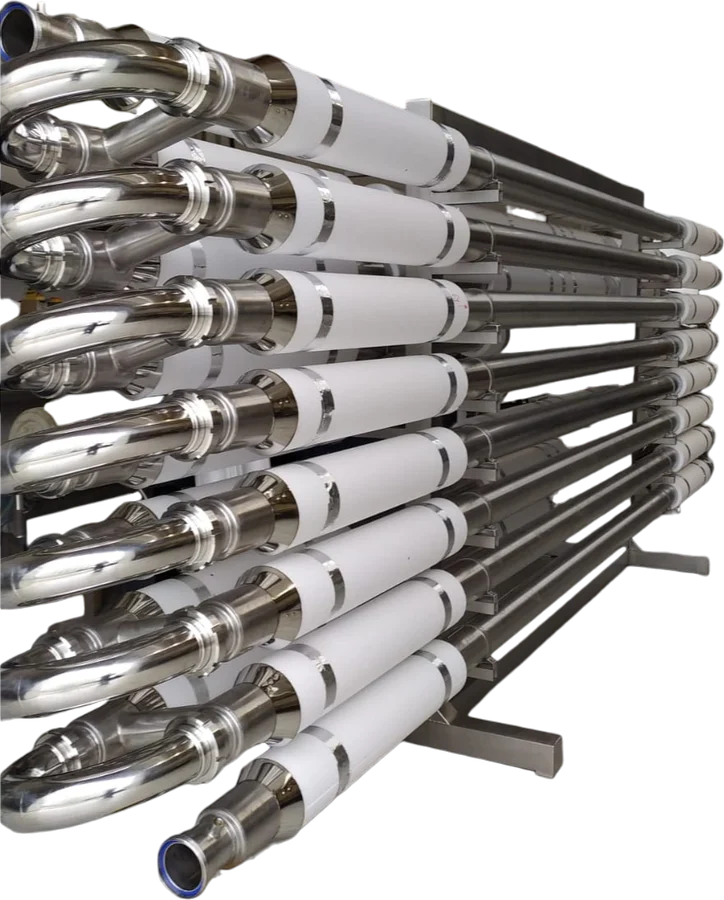
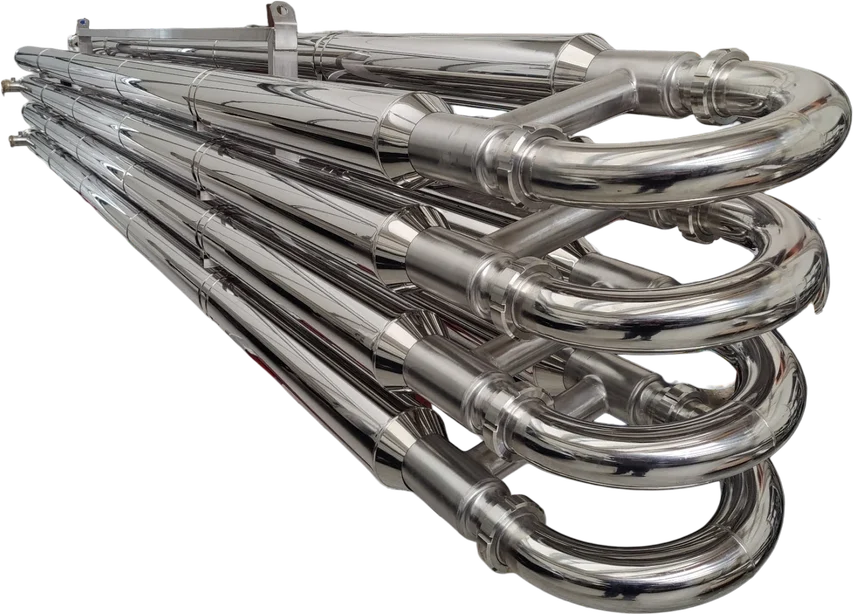
What goes under the skin depends on the duty. Polystyrene where the line runs cold, rock wool where it runs hot. Either way we close it in a thin polished stainless steel sheet, so it washes down with everything else instead of soaking up whatever lands on it. Normally we insulate the shell — that is where the surface is, and where the heat goes. It also puts the bellows out of harm’s way. Once the shell is closed, the one part on the machine that moves is hidden under the cladding: nothing to catch a knock from a pallet truck, nothing for a hose to snag on at washdown. Tell us the temperatures you work at and we will say whether it is worth it on yours.
The bundle goes in where a length of pipe is now. Milk leaves the robot, runs through the inner tubes, coolant runs around them, and it arrives at the tank already down to temperature. No extra floor space to find, nothing new standing in the dairy — the cooling happens in the run between the two.
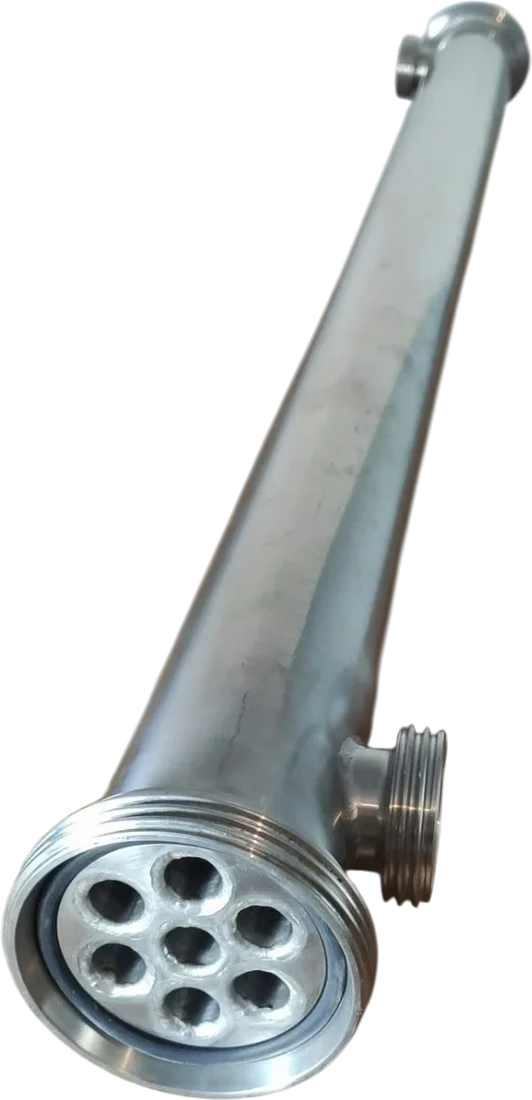
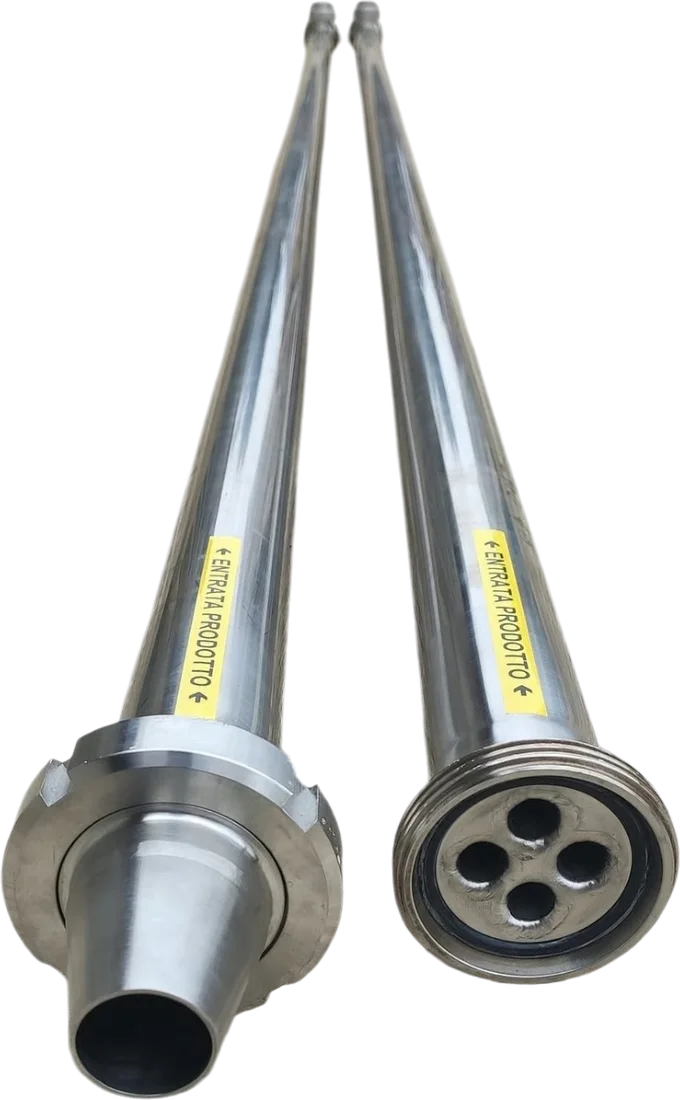
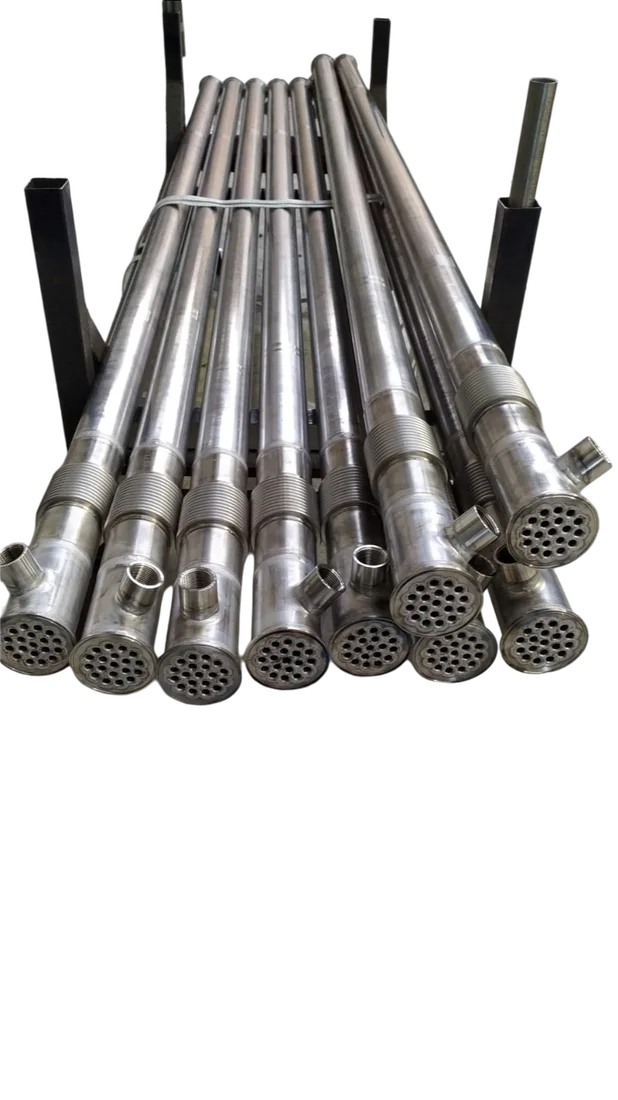
Bundles we have built. Tap any photo to enlarge.
It cools on the move
The temperature comes down during the transfer, so the milk lands in the tank already where you want it — not warm and waiting.
It fits the run you have
It replaces a length of pipe. Modular, so it goes into an existing line without rebuilding the dairy around it.
It washes with the line
Food-grade stainless on every product surface, built for CIP, cleaned in place along with everything else.
The tank only has to hold
It is no longer doing the cooling, only keeping what arrives. Less work asked of the tank, and less energy for the same result.
Tell us the robot you have and the tank it feeds, and we build the bundle to the run between them.
- 01Your product, and whether it carries pieces or fibre
- 02How much you run per hour
- 03The temperature you start from, and the one you need
- 04What you have available — steam, hot water, glycol
- 05Whether the line gets washed after production, and how hot that wash runs
That last one catches people out. An exchanger used only for cooling still sees hot water or steam every time the line is cleaned — and that is thermal cycling the machine has to survive. Tell us about the wash and we design for it, even when production never asks for heat. It is the cheapest way to buy years of service life.


Which materials are in contact with the product?
Which hygienic connections can I have?
Do you build them to measure?
Can it be cleaned in place (CIP)?
What certifications do you have?
Need this machine for your line?
Tell us about your process — we size and build it to measure, in stainless steel.
- A technician replies within 48 hours
- Free technical sizing to your needs
- We ship across Europe, the Middle East & beyond
- No obligation, no spam